September 15, 2026
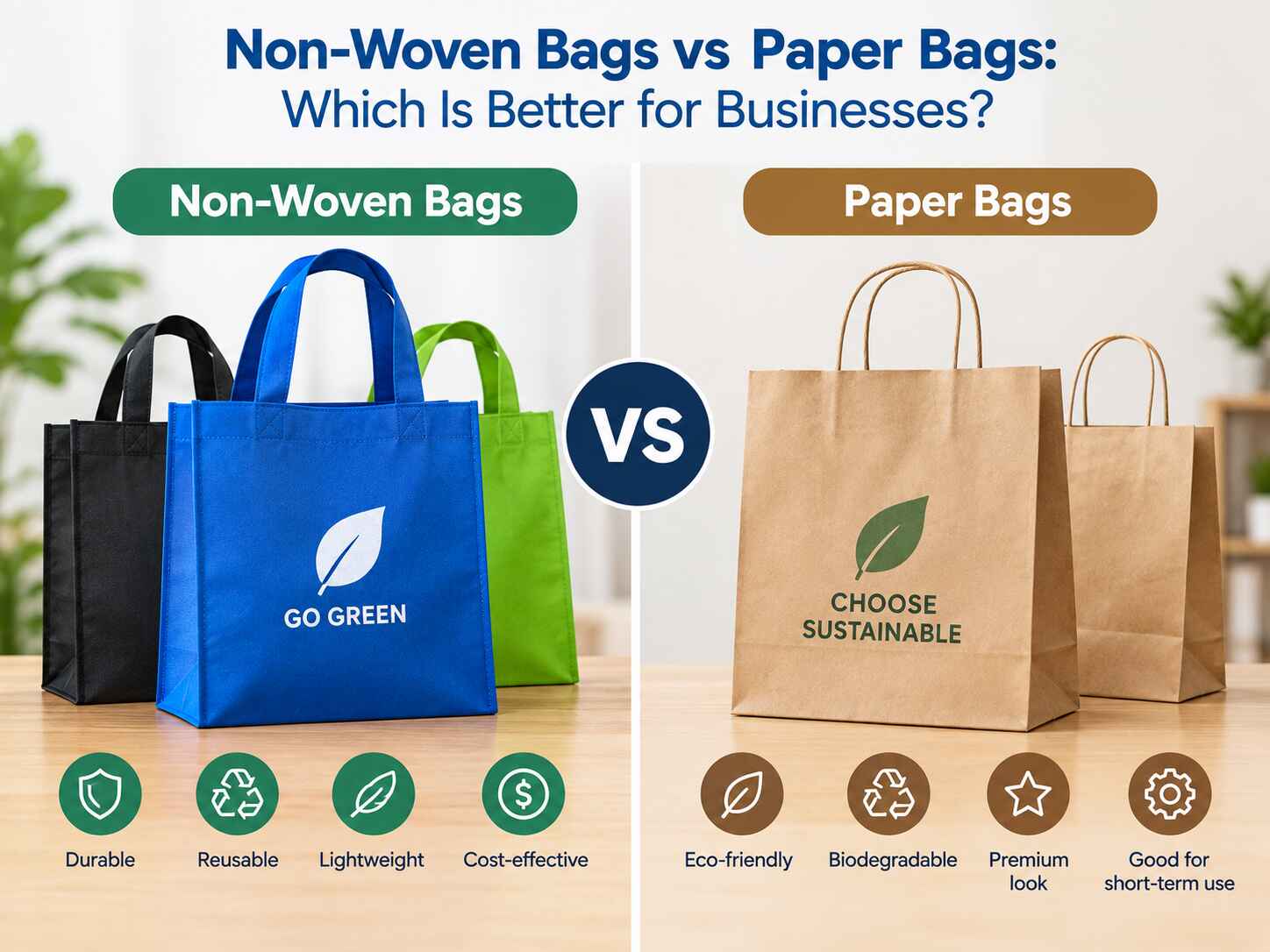
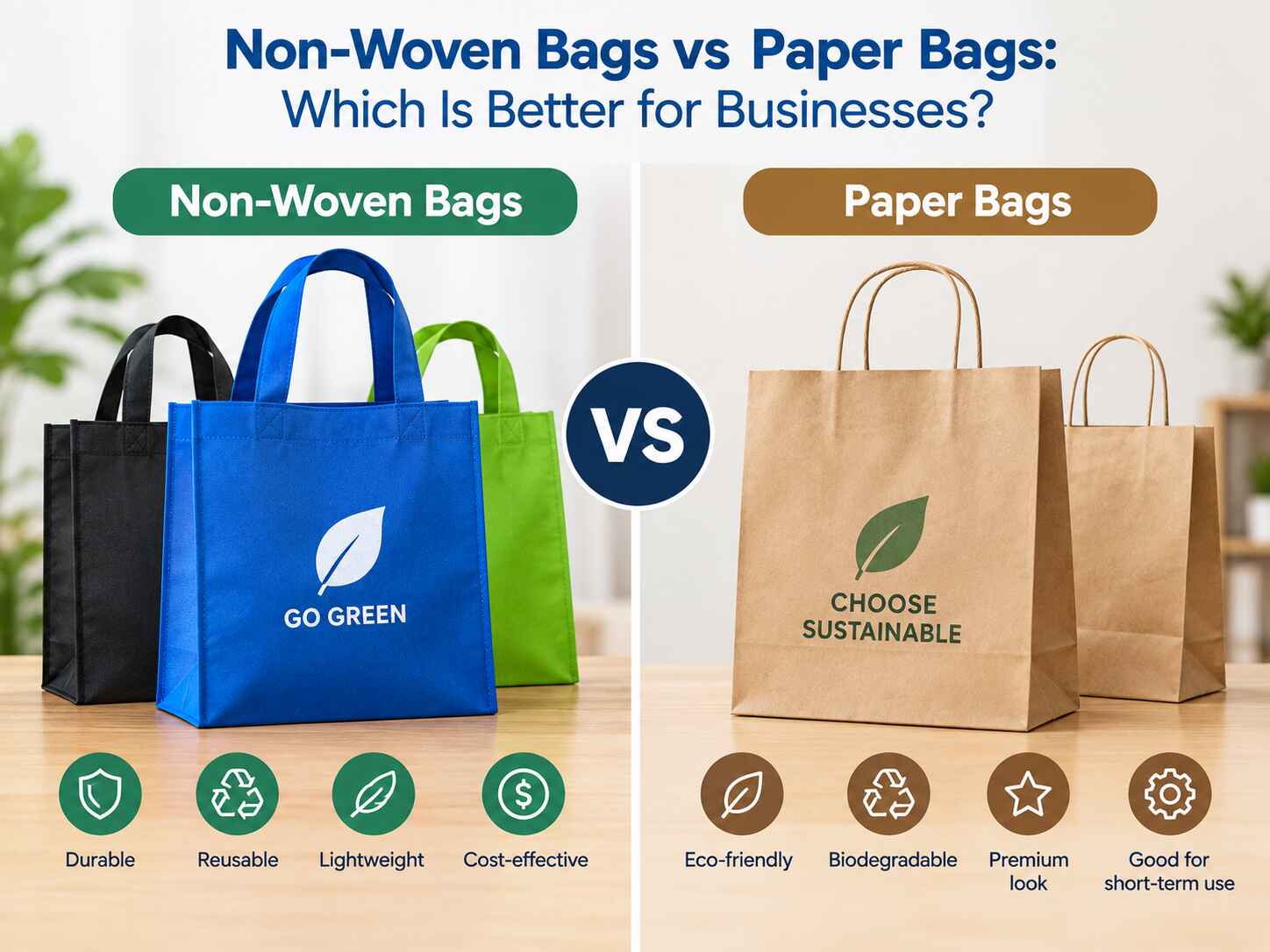
Choosing the right shopping bag is no longer just about putting a product inside something and handing it to a customer. Businesses now consider durability, appearance, cost, reusability, recyclability and environmental impact before selecting packaging. If you are comparing non-woven bags vs paper bags, the better option depends on how you plan to use the bag.
For businesses looking for practical non woven bags manufacturer in Delhi options, non-woven fabric bags can offer a reusable format with room for branding and customization. Paper packaging bags, meanwhile, can suit businesses that want a paper-based appearance and straightforward recycling options where suitable collection exists.
So, which one should a business choose? Let’s compare both materials without the usual “green packaging is always better†shortcut.
Non-woven bags are commonly made from polypropylene (PP) fibres that are bonded rather than woven like traditional fabric. They are widely used for shopping bags, promotional bags and retail packaging.
Their main advantage is reusability. A well-made bag can serve customers multiple times, which changes the packaging equation compared with a bag designed for one short use.
Businesses can also select different sizes, handles, printing options and finishes. This makes non-woven bags useful when a company wants packaging to work as a branding tool as well as a carry bag.
However, non-woven does not automatically mean biodegradable. The material and its end-of-life route matter. Businesses should therefore avoid making broad environmental claims without checking the actual material and disposal system.
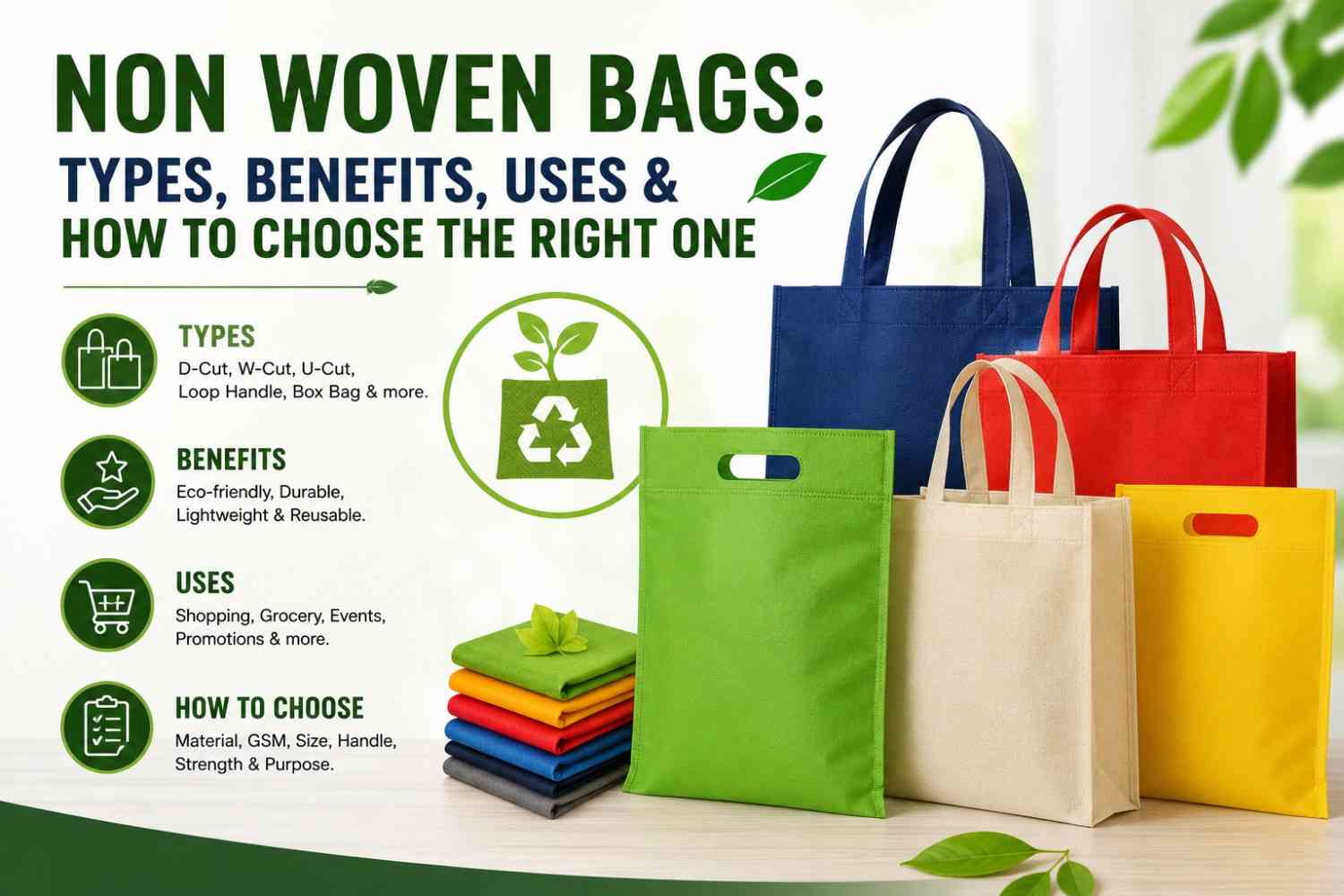
Also Read: Non Woven Bags: Types, Benefits, Uses & How to Choose the Right One
Paper bags are usually produced from paper grades such as Kraft paper. Some products use recycled paper content, while others use virgin fibre or a mixture of materials.
Paper bags have a familiar appearance and work well for retail, food, clothing and takeaway applications. They can also provide a good surface for printed bags, logos and other brand information.
One important point is that “paper†does not automatically mean environmentally harmless. The complete picture includes raw materials, manufacturing, transport, number of uses and what happens after disposal.
The EPA notes that paper bags can be made from kraft paper and that recycled content can be used in paper packaging.
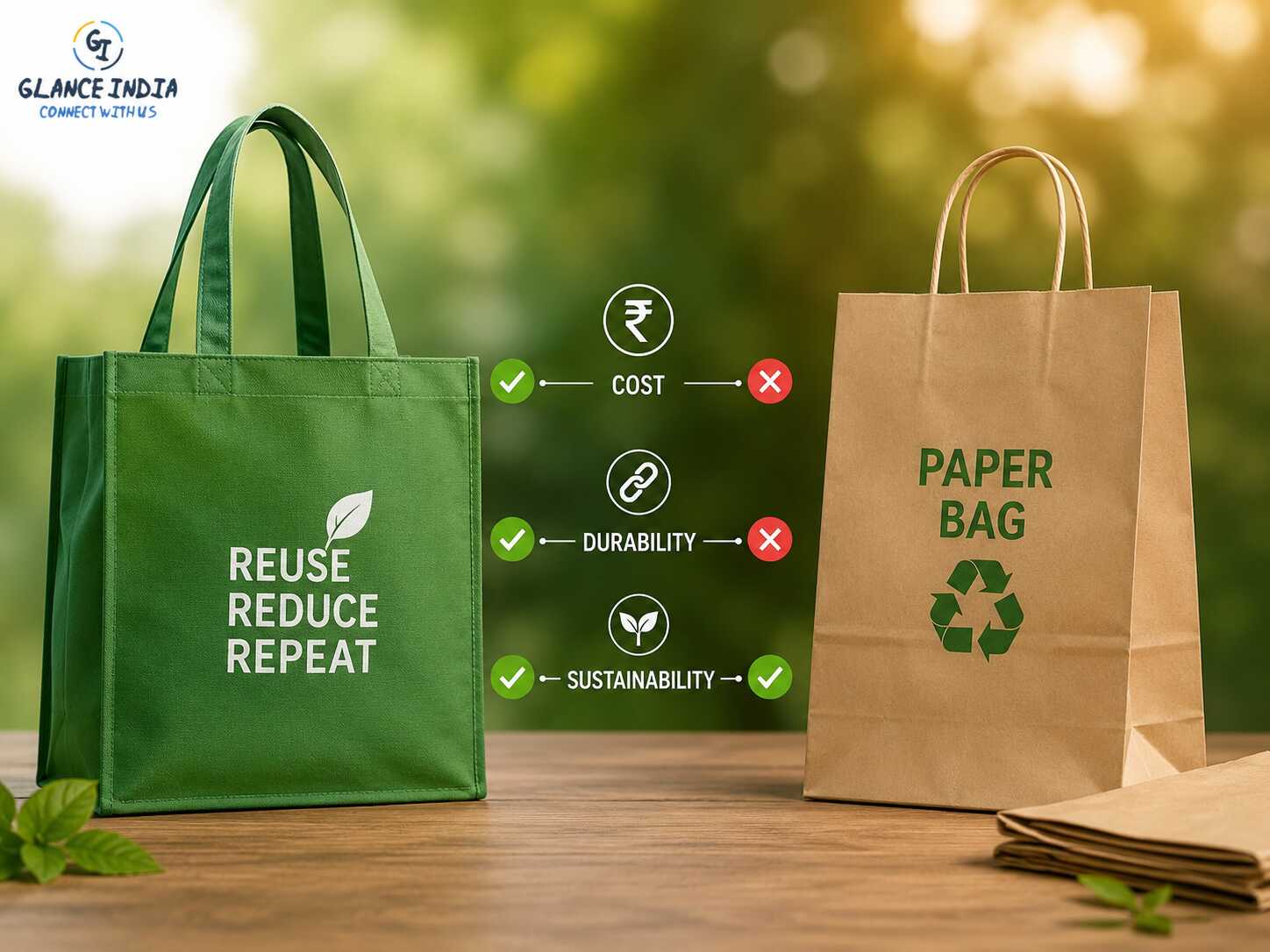
The easiest way to compare the two is to look at the factors that matter to a business.
Non-woven bags generally have an advantage when repeated use and strength are important. Their construction can make them suitable for regular retail shopping and promotional use.
Paper bags can also handle everyday retail products when the correct paper grade, size and handle design are selected. However, moisture can become a practical concern for paper.
This means businesses should consider the expected load capacity, product type and handling conditions before making a decision.
Reusability is one of the strongest arguments for reusable carry bags.
A customer who repeatedly uses the same bag can reduce the need for new bags. The actual environmental benefit depends on how often the bag gets reused and what it replaces.
The EPA recommends reusing shopping bags as one way to reduce waste.
Non-woven bags can work well in this situation because businesses can design them for continued use.
Paper bags can also be reused for some purposes, but their practical lifespan depends on the material quality, construction and conditions of use.
Both options need a realistic look at recyclability.
Paper is widely recognised as a recyclable material, but actual recycling depends on local collection and processing systems. Contamination, coatings and mixed materials can affect the process.
Non-woven polypropylene is a plastic-based material. Some polypropylene products can enter recycling streams, but acceptance varies by location and facility.
So, telling customers that one option is “100% better†without considering local waste infrastructure would oversimplify the issue.
This is where the materials behave quite differently.
Paper can lose strength when exposed to moisture, although coatings and construction can change its performance.
Non-woven polypropylene bags generally offer better resistance to everyday moisture than ordinary uncoated paper bags.
For businesses selling products that may encounter rain, spills or damp conditions, this difference can influence the packaging decision.
Packaging is also marketing.
Both materials can be used for branding, but businesses should evaluate print quality, available printing methods, colours, design requirements and expected order quantities.
Custom printed bags can display a logo, store name, contact information or promotional message. A reusable bag may continue showing that branding after the original purchase, giving the packaging a longer marketing life.
For businesses ordering bulk packaging bags, it is worth requesting samples before confirming a large production run. Check the material quality, handles, printing, dimensions and finishing rather than judging everything from a catalogue image.
This is the part where simple answers become misleading.
The environmental impact of a bag depends on its material, manufacturing process, weight, transportation, number of uses and end-of-life treatment.
The U.S. EPA does not state that paper or plastic shopping bags are universally better for the environment. Instead, it recommends reducing unnecessary consumption, reusing bags and recycling where possible.
The United Nations Environment Programme has also reviewed life-cycle assessments of carrier bags and highlighted how results can change depending on assumptions such as reuse rates and the number of shopping trips. One reviewed assessment found that non-woven polypropylene bags were reused more often than single-use alternatives in the study population.
That leads to a useful business lesson: a reusable bag only delivers its intended benefit when people actually reuse it.
Non-woven bags can be a practical choice when a business needs:
They can work particularly well for clothing stores, supermarkets, exhibitions, promotional campaigns and other retail applications.
Businesses searching for a non-woven bags manufacturer in Delhi should compare material quality, printing, handle construction, dimensions and order quantities before selecting a supplier.
For location-specific sourcing, businesses can also check Glance India through its Google Business Profile and verify the available product and service details before placing an order.
Paper bags can make sense when a business prioritises:
They are common in boutiques, bakeries, restaurants, food outlets and retail stores.
Businesses that want paper packaging should check whether the bag contains coatings, handles or other materials that may affect recycling in their local system.
Cost should never be judged only by the price of one bag.
A business should consider material quality, expected lifespan, printing, customization, order quantity, transportation and how often customers are likely to reuse the bag.
A cheaper bag that fails quickly can create a poor customer experience. On the other hand, buying a more expensive reusable option may make sense when customers repeatedly use it.
Businesses looking for the cheapest non woven bags in Delhi should therefore compare the complete specification rather than choosing purely on the lowest quoted price.
Ask suppliers about material thickness, dimensions, handle type, printing, order quantity and expected application. A useful comparison is based on value per use, not just the first invoice.
There is no single winner in the non-woven bags vs paper bags debate.
Choose non-woven bags when reusability, durability, branding and repeated retail use are your priorities.
Choose paper bags when paper-based packaging, retail presentation and suitable recycling infrastructure are more important for your application.
If your business needs reusable retail packaging at scale, working with an experienced non-woven bags manufacturer in Delhi can help you compare specifications and select a suitable product.
For businesses that need different designs, retail packaging solutions should also consider product weight, bag dimensions, storage requirements and customer usage.
Well then, which one is better? It all comes down to your business’s needs. Here we are, contrasting between non-woven bags and paper bags. You should look at the durability, reusability, aesthetic appeal, eco-friendliness and recyclability as well as the actual purpose of using such bags by the consumer. Non-woven bags can prove beneficial for those businesses that require packaging that can be reused multiple times and customized as per their preferences.
There is not a winner in this context because everything depends on the product, strength needed, budget and packaging purposes. Glance India can assist your business in finding the best possible solutions according to your packaging needs. Rather than simply going for the cheapest product, compare the material quality, process, customization and expected usage before ordering. Want more information about the right packaging option for your business? Feel free to contact us for more info.
Copyright © 2024 Glance India. | All Rights Reserved. Design By : SBBJ IT SOLUTIONS